
Last updated: February 2026 | 18 min read
Meta Description: Vietnamese coffee is bold, sweet, and steeped in tradition. Learn its history, why robusta matters, how to brew with a phin filter, and 10+ authentic recipes to try at home.
Table of Contents
- What Makes Vietnamese Coffee Different?
- A Brief History: From French Colonial Influence to Global Phenomenon
- Why Robusta? Understanding Vietnam’s Coffee Bean
- The Phin Filter: Vietnam’s Elegant Brewing Device
- Traditional Vietnamese Coffee Drinks
- How to Brew Perfect Vietnamese Coffee at Home
- Common Mistakes and How to Avoid Them
- Modern Vietnamese Coffee Culture
- Where to Buy Authentic Vietnamese Coffee
- FAQs About Vietnamese Coffee
What Makes Vietnamese Coffee Different?
If you’ve only experienced Vietnamese coffee through a menu item at a boba shop, you’ve barely scratched the surface. Vietnamese coffee isn’t just a beverage—it’s a cultural practice, a meditation, and a daily ritual practiced by millions across Vietnam and the diaspora.
Five things that set Vietnamese coffee apart:
1. Robusta Beans, Not Arabica
While most specialty coffee shops worship arabica, Vietnam built its coffee identity on robusta—a bolder, stronger bean with nearly double the caffeine. High-quality Vietnamese robusta tastes like dark chocolate, roasted nuts, and caramel, with full body and low acidity.
2. Phin Filter Brewing
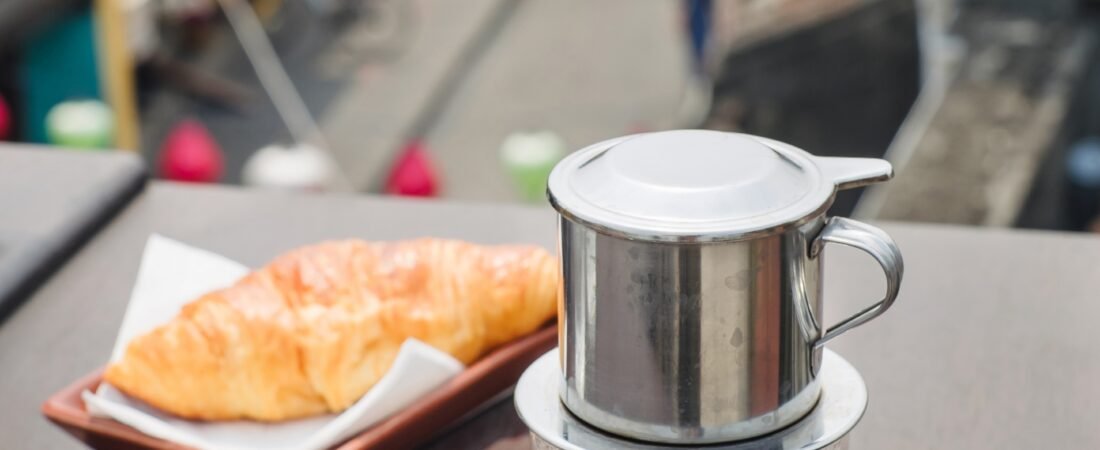
Forget paper filters and electric drip machines. Vietnamese coffee brews slowly through a small metal filter called a phin, placed directly over your cup. The process takes 4-5 minutes—too slow for impatience, perfect for mindfulness.
3. Sweetened Condensed Milk
In Vietnam, coffee isn’t typically drunk black or with regular cream. Thick, sweet condensed milk balances the bold robusta, creating a dessert-like drink that’s intensely satisfying. This isn’t a flavor hack—it’s integral to the tradition.
4. Slow Culture, Not Speed
Vietnamese coffee rejects the “grab and go” mentality. You brew it slowly, you drink it slowly, often sitting on a tiny plastic stool watching the street. It’s an anti-hustle ritual in a hurried world.
5. Hot or Iced (But Mostly Iced)
In tropical Vietnam, cà phê sữa đá (iced coffee with condensed milk) dominates. The hot version exists, but most Vietnamese drink their coffee cold, even in air-conditioned spaces.
A Brief History: From French Colonial Influence to Global Phenomenon
The French Introduction (1857)
Coffee came to Vietnam in the mid-1800s via French colonists, who established plantations in the Central Highlands. The cool, mountainous terrain and volcanic red soil proved ideal for coffee cultivation.
The French brought arabica first, but it struggled in Vietnam’s climate and suffered from pests. Robusta, introduced later, thrived—more resilient, higher-yielding, and better suited to local conditions.
Post-War Growth (1975-1990s)
After the Vietnam War, the reunified government invested heavily in coffee production as an economic development strategy. Farms expanded rapidly across the Central Highlands (especially Đắk Lắk, Gia Lai, and Lâm Đồng provinces).
By the 1990s, Vietnam had become the world’s second-largest coffee producer (after Brazil), supplying much of the world’s robusta for instant coffee and espresso blends.
The Diaspora Influence (2000s-Today)
Vietnamese immigrants brought coffee culture to the U.S., especially in California and Texas. What started as nostalgic drinks in Vietnamese restaurants gradually crossed over into mainstream American café culture.
Today, Vietnamese iced coffee appears on menus at Starbucks, Dunkin’, and countless independent cafés—though often simplified or sweetened with syrups rather than traditional condensed milk.
Modern Vietnam’s Coffee Renaissance (2010s-Present)
Vietnam’s domestic coffee scene has exploded in the past decade. Hanoi and Saigon now boast world-class specialty cafés, experimental roasters, and a new generation of coffee professionals elevating Vietnamese beans beyond commodity status.
Signature drinks like cà phê trứng (egg coffee) from Hanoi and cà phê cốt dừa (coconut coffee) have gone viral internationally, proving Vietnamese coffee culture continues to innovate.
Why Robusta? Understanding Vietnam’s Coffee Bean
The Robusta Reputation Problem
In specialty coffee circles, robusta has a bad reputation. It’s often described as harsh, bitter, rubbery—the cheap bean used in instant coffee and low-grade espresso blends.
But that’s like judging all wine by boxed wine.
Low-quality robusta (hastily processed, poorly roasted) does taste bad. But high-quality robusta—like what Vietnamese farmers grow in volcanic soil at elevation—is a completely different experience.
What Makes Vietnamese Robusta Special?
Growing Conditions:
- Elevation: 1,200-1,500 meters in the Central Highlands
- Soil: Volcanic red basalt soil, rich in minerals
- Processing: Natural (dry) processing, sun-dried on raised beds
- Varietal: Traditional robusta cultivars adapted over generations
Flavor Profile:
- Dark chocolate and cocoa
- Roasted almonds and hazelnuts
- Caramel sweetness
- Earthy, full-bodied
- Low acidity (easy on sensitive stomachs)
Caffeine:
Robusta contains 2-2.5% caffeine vs. arabica’s 1-1.5%. A cup of Vietnamese coffee delivers roughly 200mg caffeine compared to 100mg for typical drip coffee.
Why Vietnam Chose Robusta
Practical reasons:
- More resilient to pests and disease
- Thrives in Vietnam’s climate
- Higher yields per hectare
- Faster maturation (2 years vs. 3-4 for arabica)
Cultural reasons:
- Bold flavor matches Vietnamese taste preferences
- Stands up to sweetened condensed milk
- Provides strong energy for long work days
Economic reasons:
- Global demand for robusta in espresso and instant coffee
- Lower production costs = accessible to small farmers
- Vietnam’s competitive advantage in the global market
The Phin Filter: Vietnam’s Elegant Brewing Device
The phin filter is the heart of Vietnamese coffee culture—simple, elegant, and nearly impossible to mess up.
What Is a Phin Filter?
A phin is a small metal brewing device consisting of four parts:
- Brewing chamber (the main cup with perforations)
- Gravity filter (sits inside chamber, has small holes)
- Press filter (screw-down disk that sits on top of grounds)
- Lid (keeps heat in during brewing)
Total cost: $6-25 depending on quality. One phin lasts decades.
How a Phin Works
Unlike paper-filtered coffee, the phin uses gravity and metal perforations to slowly drip-brew coffee directly into your cup. The process:
- Coffee grounds sit in the chamber
- Hot water is added on top
- Press filter compresses grounds slightly (creates resistance)
- Water slowly seeps through grounds and drips into cup below
- Takes 4-5 minutes (patience required!)
The metal filter preserves coffee oils that paper filters remove, resulting in richer body and mouthfeel.
Types of Phin Filters
Aluminum vs. Stainless Steel:
- Aluminum: Cheaper ($5-8), lightweight, but can impart metallic taste and dent easily
- Stainless steel: More expensive ($15-25), heavier, rust-proof, better heat retention, lasts forever
Sizing:
- Small (4-6oz): Individual servings
- Medium (8oz): Standard, most versatile
- Large (10-12oz): Sharing or extra-strong brews
Press filter types:
- Gravity only: No press filter, relies on weight of chamber
- Screw-down press: Adjustable compression (better control)
Caring for Your Phin
- Rinse immediately after use
- Dishwasher safe (stainless steel only)
- Deep clean monthly: soak in hot water + baking soda
- Don’t over-scrub—coffee oils season the metal over time
- No need to dry meticulously; air dry is fine
Traditional Vietnamese Coffee Drinks
Cà Phê Sữa Đá (Iced Coffee with Condensed Milk)
The quintessential Vietnamese coffee. Sweet, creamy, strong, and served over ice.
Recipe:
- 2-3 tbsp sweetened condensed milk in glass
- Brew 4-6oz coffee with phin directly over milk
- Stir vigorously
- Add ice
Variations:
- Extra sweet: 4 tbsp condensed milk
- Less sweet: Use 1 tbsp + ice dilution
- Vegan: Substitute coconut condensed milk
Cà Phê Đen (Black Coffee)
Straight, no milk. For purists and those who want maximum caffeine with zero sweetness.
Served hot or iced:
- Hot: Drink straight from phin brewing
- Iced (cà phê đen đá): Brew over ice, optionally add sugar
Cà Phê Sữa Nóng (Hot Coffee with Condensed Milk)
The hot version of cà phê sữa đá. Comforting in winter or air-conditioned spaces.
Cà Phê Trứng (Egg Coffee)
Hanoi’s famous invention. Created in the 1940s during a milk shortage, this drink features whipped egg yolk and condensed milk beaten into a creamy, meringue-like foam.
Taste: Like coffee tiramisu in a cup—rich, custardy, sweet.
How it’s made:
- Whisk egg yolk + condensed milk + sugar into thick foam
- Brew strong black coffee
- Top coffee with egg foam
- Serve hot in a small cup, often sitting in hot water to maintain temperature
Bạc Xỉu
Saigon’s “white coffee.” Essentially a latte made with condensed milk—more milk than coffee, very sweet, approachable for non-coffee-drinkers.
How it differs: Reverse ratio—lots of condensed milk, less coffee.
Cà Phê Cốt Dừa (Coconut Coffee)
A Southern Vietnamese specialty. Coffee mixed with thick coconut cream, creating a tropical, dessert-like drink.
Modern variation: Blended with ice for a frappé-style drink.
Cà Phê Sữa Chua (Yogurt Coffee)
The surprise hit. Tangy yogurt mixed with sweetened coffee. Sounds weird, tastes amazing—like a coffee smoothie with probiotic benefits.
How to Brew Perfect Vietnamese Coffee at Home
What You Need
Essential:
- Phin filter (stainless steel recommended)
- Vietnamese coffee (coarsely ground robusta)
- Sweetened condensed milk
- Hot water (195-205°F / 90-96°C)
- Glass or mug
Optional:
- Thermometer (if you want precision)
- Timer (helpful at first)
Step-by-Step Brewing Guide
Step 1: Prepare Your Glass
Add 2-3 tablespoons sweetened condensed milk to bottom of glass.
Step 2: Set Up Phin
Place phin filter (with gravity filter inside) on top of glass.
Step 3: Add Coffee
Add 2-3 tablespoons coarsely ground coffee to phin chamber. Gently shake to level the grounds.
Step 4: Compress Grounds
Place press filter on top, screw down gently—snug but not tight. You want resistance, not compression.
Step 5: Bloom the Coffee
Pour just enough hot water to cover grounds (about 2 tablespoons). Wait 30-45 seconds as coffee “blooms” (releases CO2).
Step 6: Fill Phin
Pour hot water to fill the phin chamber. Place lid on top to retain heat.
Step 7: Wait
Coffee will drip slowly—should take 4-5 minutes total. If it drips too fast (under 3 min), grind finer or tighten press filter next time. Too slow (over 6 min)? Loosen press or use coarser grind.
Step 8: Stir and Ice
Once dripping stops, remove phin. Stir condensed milk and coffee vigorously (it won’t mix on its own). Add ice and enjoy.
Ratios and Measurements
Coffee to water: 1:3 to 1:4 ratio
- 15-20g coffee → 60-80ml water
- Roughly 2-3 heaping tablespoons ground coffee
Condensed milk: 2-3 tablespoons per serving
- Start with 2 tbsp, adjust to taste
- More milk = sweeter, less coffee-forward
Ice: Fill glass to top after stirring
Water Temperature
Ideal range: 195-205°F (90-96°C)
No thermometer?
- Boil water, let sit 1 minute = ~200°F
- Or pour boiling water into room-temp mug first, then use that water (loses ~10°F)
Too hot (boiling): Can scald coffee, create bitterness
Too cool (<190°F): Weak extraction, sour notes
Common Mistakes and How to Avoid Them
Mistake #1: Using the Wrong Grind Size
Problem: Coffee drips too fast (weak, watery) or too slow (bitter, over-extracted)
Solution: Use coarse grind, similar to French press. Pre-ground “Vietnamese coffee” from Asian markets is usually correct. If grinding yourself, go coarser than you think.
Mistake #2: Over-Tightening the Press Filter
Problem: Water can’t flow through, drip is painfully slow or stops entirely
Solution: Screw press filter down gently—just snug, not tight. You want resistance, not blockage.
Mistake #3: Skipping the Bloom
Problem: Uneven extraction, weak flavor
Solution: Always bloom! Pour small amount of water first, wait 30-45 seconds, then fill phin.
Mistake #4: Using Boiling Water
Problem: Scorched, bitter coffee
Solution: Let boiling water cool 1 minute before pouring, or aim for 195-205°F.
Mistake #5: Wrong Coffee-to-Milk Ratio
Problem: Too sweet/milky or too bitter
Solution: Start with 2 tbsp condensed milk per 4-6oz coffee. Adjust from there based on preference.
Mistake #6: Not Stirring
Problem: Condensed milk stays at bottom, first sips are bitter, last sips cloyingly sweet
Solution: Stir vigorously before adding ice! Condensed milk is thick—requires aggressive mixing.
Mistake #7: Using Arabica Beans
Problem: Weak, sour, doesn’t taste “Vietnamese”
Solution: Use robusta! The traditional flavor comes from the bean itself. Arabica won’t give you authentic results.
Modern Vietnamese Coffee Culture
Vietnam’s Café Scene Today
Walk through Hanoi or Ho Chi Minh City and you’ll find coffee shops on every corner—from traditional sidewalk stalls with plastic stools to Instagram-worthy minimalist cafés.
Notable trends:
1. Specialty Coffee Movement
Vietnamese roasters like The Workshop, Trung Nguyên Legend, and Shin Coffee are elevating local beans to specialty-grade, experimenting with processing methods and roast profiles.
2. Egg Coffee Tourism
Hanoi’s Café Giang (birthplace of egg coffee) has become a pilgrimage site. Dozens of cafés now offer variations.
3. Coconut Coffee Craze
Cà phê cốt dừa went viral internationally thanks to social media. Cafés worldwide now offer “Vietnamese coconut coffee.”
4. Salted Cream Trend
Topping coffee with salted cream foam (similar to salted caramel) became a massive trend in Vietnam in the 2010s.
5. Cold Brew Innovation
Vietnamese cold brew—slow-dripped over 12-24 hours—produces incredibly smooth, chocolatey concentrate.
Vietnamese Coffee in the U.S.
Historic presence:
Vietnamese Americans have operated cafés since the 1980s, primarily in California (Little Saigon in Westminster), Texas (Houston), and Louisiana (New Orleans).
Mainstream adoption:
- Starbucks added Vietnamese Iced Coffee to menus (2023)
- Dunkin’ tested Vietnamese Coffee drinks
- Indie cafés across the U.S. feature Vietnamese-inspired drinks
Cultural preservation:
Second and third-generation Vietnamese Americans are reclaiming and elevating their coffee heritage, opening modern cafés that honor tradition while innovating (e.g., Cafe Cà Phê in Brooklyn, Fat Miilk in LA).
Where to Buy Authentic Vietnamese Coffee
Online Retailers
Saigon Ritual (that’s us!)
- Direct-trade robusta from Central Highlands
- Includes phin filters and brewing guides
- Freshly roasted in small batches
Trung Nguyên
- Vietnam’s largest coffee brand
- Available on Amazon
- Wide range of blends
Cafe Du Monde
- New Orleans classic (not Vietnamese, but popular pairing)
- Coffee + chicory blend
- Available at most U.S. grocery stores
Local Sources
Asian grocery stores:
- Look for brands: Trung Nguyên, Café Du Monde, Highlands Coffee, Vinacafe
- Usually pre-ground for phin brewing
- Budget-friendly ($6-12 per bag)
Vietnamese cafés and restaurants:
- Many sell bags of their house coffee
- Ask if they’ll grind it for you
What to Look For
On the label:
- “Robusta” or “cà phê robusta”
- “Product of Vietnam” or Central Highlands origin
- Coarse ground (if buying pre-ground)
- Roast date (fresher = better)
Avoid:
- Instant coffee (unless you specifically want that)
- Arabica-only blends labeled “Vietnamese coffee”
- Stale coffee (over 6 months past roast date)
FAQs About Vietnamese Coffee
Is Vietnamese coffee stronger than regular coffee?
Yes, in multiple ways:
- Higher caffeine (~200mg per cup vs. ~100mg for drip)
- Bolder, more concentrated flavor
- Robusta naturally contains more caffeine than arabica
Can I make Vietnamese coffee without a phin filter?
Sort of, but it won’t be the same. Alternatives:
- French press: Closest substitute, but won’t have same concentrated strength
- Espresso machine: Use Vietnamese coffee for espresso shots
- AeroPress: Inverted method, steep 4-5 minutes
- Moka pot: Creates strong coffee, Italian but similar vibe
Is Vietnamese coffee healthy?
Depends on how you prepare it:
- Black coffee: Very healthy—high antioxidants, metabolism boost, cognitive benefits
- With condensed milk: Higher in sugar and calories, but fine in moderation
One serving of cà phê sữa đá = ~150-200 calories and 15-20g sugar. Comparable to a flavored latte.
Why is Vietnamese coffee so sweet?
Because it’s traditionally served with sweetened condensed milk, which contains both milk and sugar. The sweetness balances robusta’s bold, earthy bitterness—they’re designed to work together.
If you want less sweet: use less condensed milk, dilute with regular milk, or drink it black.
Can I use regular milk instead of condensed milk?
You can, but it’s not traditional and the flavor profile changes significantly. Condensed milk is thick, sweet, and slightly caramelized—regular milk is thin and neutral.
Better alternatives to condensed milk:
- Coconut condensed milk (vegan option)
- Half-and-half + simple syrup
- Oat milk + maple syrup
Where can I buy a phin filter?
- Online: Amazon, Saigon Ritual, specialty coffee retailers
- Local: Asian grocery stores (usually $5-10 for aluminum, $15-25 for stainless)
- Vietnamese restaurants: Some sell them
How do I store Vietnamese coffee?
Best practices:
- Airtight container (opaque, not clear glass)
- Cool, dry place (not fridge or freezer)
- Use within 3 months of roast date for peak flavor
- Whole beans stay fresh longer than ground
Can I cold brew Vietnamese coffee?
Absolutely! Vietnamese cold brew is amazing:
- Use coarse-ground robusta
- 1:4 ratio (coffee to water)
- Steep 12-24 hours in fridge
- Strain and serve over condensed milk + ice
What’s the difference between cà phê sữa đá and Thai iced coffee?
Both are Southeast Asian iced coffee with condensed milk, but:
- Vietnamese: Uses robusta, phin-brewed, typically no spices
- Thai: Often includes chicory, cardamom, or other spices, sometimes tamarind
Thai coffee tends to be slightly sweeter and more complex in flavor.
Is Vietnamese coffee vegan-friendly?
Traditional preparation is not (contains condensed milk from dairy).
Vegan options:
- Use coconut condensed milk (Nature’s Charm brand)
- Sweeten with maple syrup or agave
- Use oat milk or coconut milk
The coffee itself (robusta beans) is 100% plant-based.
Final Thoughts: More Than Just Coffee
Vietnamese coffee isn’t about efficiency or convenience. It’s about ritual—the deliberate act of slowing down, the satisfaction of waiting, the pleasure of simplicity done right.
In a world of pod machines and drive-through lattes, the phin filter is a small rebellion. It says: This is worth my time. This moment matters.
Whether you’re Vietnamese-American reconnecting with your heritage, or simply someone curious about one of the world’s great coffee traditions, we invite you to pull up a (tiny plastic) stool and join the ritual.
Start your journey: Shop Vietnamese Coffee